Sunday, 4 July 2021

JUNE 2021 - Uncommon and rare species

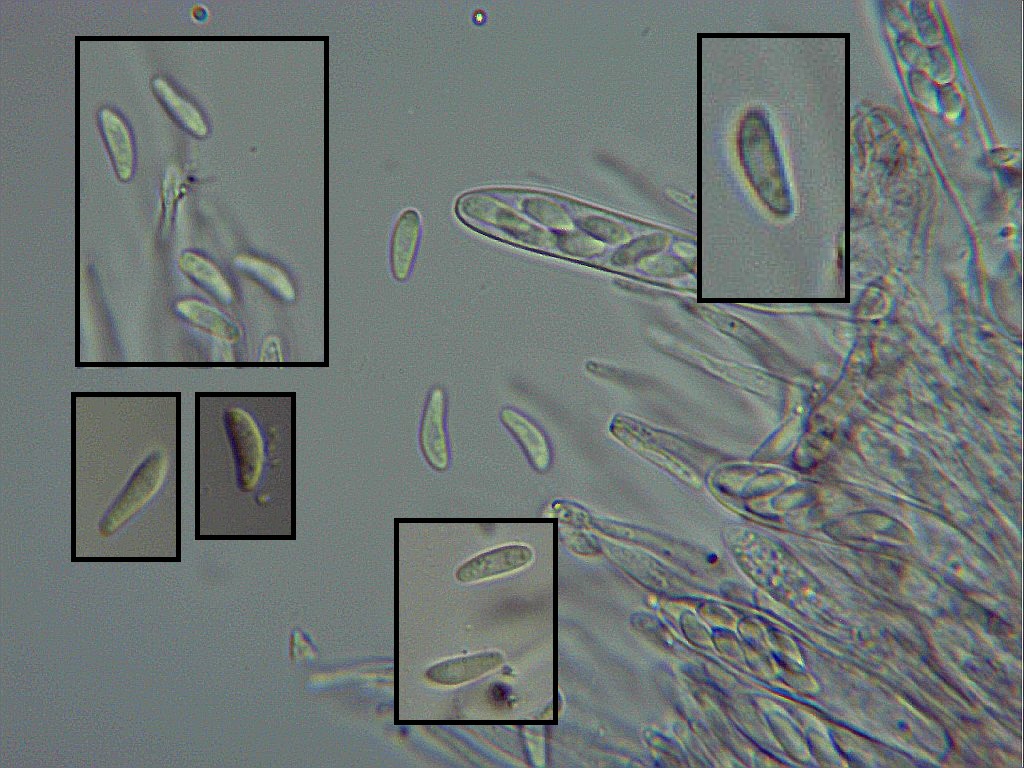
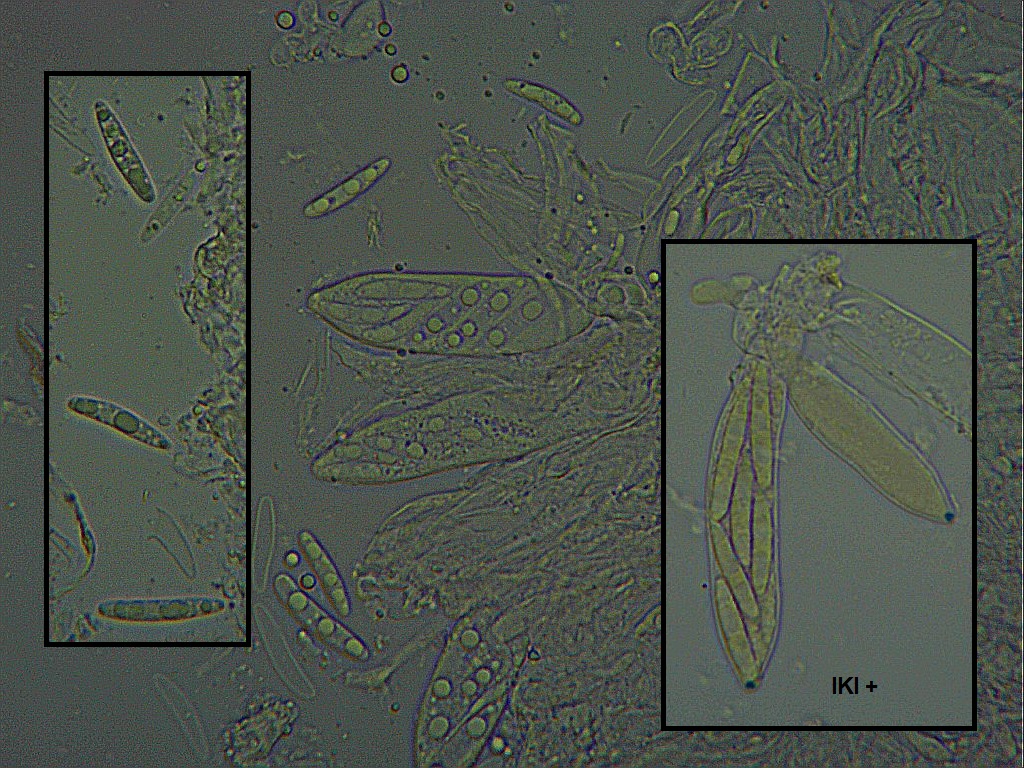
June was a little dry but I stuck to dampish areas as much as I could as at least most ascomycetes had a chance of still surviving. First up was a basidiomycete in Crepidotus applanatus, not so common and found in an early state and so more easily recognisable. Many other ascos across the month included the unusual but spectacular looking Dinemasporium strigosum - hardly recognisable at the time with the naked eye but under the microscope it provides fireworks! Found on wood, which is very unusual, so my guess this one is a variant of sorts of this mostly unresearched genus. Only a few records of Episphaeria fraxinicola exists, and I have another one in Cornwall also! Must be as it is so small and indistinguishable and often missed. A Hyaloscypha species turned into the rarer variant H. fuckelii var alniseda after careful examination. The nominate was also found in June so added here for comparison. Hymenoscyphus menthae was a nice find besides a marshy area and therefore wet branch, which is where this thrives. A Myxomycete with only two mature examples still showed it to be a new find for me in Macbrideola cornea, with a 'burnt out oak tree' as a sure sign of this species representing the capillitum. Two exciting finds in the Mollisia genus were M. atlantica and M. benesuada. Any Mollisia needs careful examination and these two more than most. Key in the former were septate spores in and out of the ascus. Pyrenopeziza millegrana rounded off a good month. Lets hope Fungus Groups will get back together soon and we can actually talk with other fungifolks. 

Crepidotus applanatus

Crepidotus applanatus

Dinemasporium strigosum .... or?

Dinemasporium strigosum spores

Epishaeria fraxinicola

Epishaeria fraxinicola

Hyaloscypha fuckelii var. alniseda

Hyaloscypha fuckelii var. alniseda

Hyaloscypha fuckelii var. alniseda

Hyaloscypha fuckelii var. fuckelii

Hyaloscypha fuckelii var. fuckelii

Hyaloscypha fuckelii var. fuckelii

Hyaloscypha fuckelii var. fuckelii

Hymenoscypha menthae

Hymenoscypha menthae

Macbrideola cornea

Macbrideola cornea

Mollisia atlantica

Mollisia atlantica

Mollisia benesuala

Mollisia benesuala

Mollisia benesuala

Pyrenopeziza millegrana

Pyrenopeziza millegrana


Wednesday, 2 June 2021

MAY 2021 - Uncommon and rare species

May produced another fine collection of uncommon ascomycetes and a Cyphelloid and Basidiomycete. The Cyphelloid was found on old Herecleum stem, common name Bowl Hoodie, so must be quite a recent name looking like a white caped mysterious monk. Cistella grevillei is quite scarce in Gloucs. and was found on Urtica dioica. Cliopilus hobsonii was a nice find attached to a Sycamore twig on the ground looking everything like an ascomycete but seeing the basidia under the 'scope clearly identifies this as a basidiomycete. While taking time out at the now local Slimbridge Wildlife Trust on the Severn, I passed some dead Teasel. The first one I selected had tiny ascos growing at the base which I later found to be a very rare type of Didymella, this being D. caulicola. Not easy to ID as only one other gathered in UK and research text very thin on the ground, inc. 1882 document stating this substrate the only one for this species. Ascospore size was unusually large which also helped. A short trip to a new woodland for me at Hailey Wood, part of the Bathurst Estate which includes part of the amazing Macmillian Way, a footpath that seems to meander through the Cotswolds everywhere. Here I found Lachnellula calycina on Pinus - 1st for Gloucs and only nine other records in UK. Another new area which I felt needed exploring was The Leasowes woodland northeast of Sapperton. A beautiful woodland, with springs and streams, everything you need for fungi at this time of the year. Here I came across a Lachnum species which I thought might be the common L. virgineus but examination proved to be the rarer L. controversum, probably named this way as it is so close to many other species. Take a look at the paraphyses here and see the difference. Under a branch half-submerged and driftwood of probably Fagus or Ash, I found a lovely glassy yellow asco which turned into Phaeohelotium epiphyllum. So another good month in the field and The Cotswolds are providing wonderful locations as good as Cornwall used to be, if not better due the variety of tree and habitat access. Footpaths are everywhere here! In Cornwall you are given a curious eye just using a public footpath and looking slightly odd, (I can't help that - and I'm an amateur mycologist!) on your own with a mushroom in your ear.

Calyptella capula

Calyptella capula

Cistella grevillei

Cistella grevillei

Clitopilus hobsonii spores

Clitopilus hobsonii

Didymella caulicola

Didymella caulicola

Didymella caulicola

Lachnellula calycina

Lachnellula calycina

Lachnum controversum

Lachnum controversum

Phaeohelotium epiphyllum asci

Phaeohelotium epiphyllum


Monday, 10 May 2021

APRIL 2021 - Uncommon and rare species

 April was a very dry month and with it came the difficulty of finding Fungi. Focussing on Ascomycetes and where I could find damp conditions helped and yet one or two very interesting species were still found. One was new to the UK thanks to the incredible knowledge and experience of Dr Paul Cannon (Kew). After visiting my recently found delight, a short walk from home - a Willow Carr with flowing stream, etc., I found two ascos on one small branch of Salix close to a stream. One belonged to the Hysterium genus but I knew this wasn't the usual common species of H. angustatum. Paul confirmed with me that this was H. smilacis (1st for Gloucs. and very few other records in the UK) but even better was the tiny black dots on the same branch which Paul discovered was a new species for the UK in Eutypa petrakii. Again, on another trip close by on the root end of a dead but large and so very thorny Rubus stem, I found what looked like a Nectria species. This turned into the new genus of Thelonectria rubi (1st Gloucs./few others in UK). Other new species for Gloucs were: Exidiopsis calcea, Mollisia hydrophila and probably Sistotremastrum suecicum, as I couldn't see any 6-sterigmata on the basidia as difficulty to see just four. Quite a few others also and have added these below as uncommon only. 

Eutypa petrakii (new UK species) - pic © P. Cannon

Eutypa petrakii (new UK species)

Exidiopsis calcea

Exidiopsis calcea spores 1000x

Hysterobrevium smilacis spores

Hysterobrevium smilacis

Pyrenopeziza carduorum


Pyrenopeziza carduorum asci

Pyrenopeziza carduorum ascospores


Mollisia hydrophila

M. hydrophila on Carex sps

Mollisia hydrophila


Sistotremastrum suecicum

Sistotremastrum suecicum

Sistotremastrum suecicum

Sistotremastrum suecicum spores

Thelonectria rubi

Thelonectria rubi


Monday, 5 April 2021

MARCH 2021 - uncommon and rare species around my new home - Stroud. Looking forward to the Cotswolds.

I recently moved to SW Stroud in Gloucestershire and to my delight found more footpaths nearby than I ever had access to in Cornwall. My first stroll found a delightful Willow Carr area in a location called The Heavens, which will be my local patch for sure. If the name has anything to do with it then it could well be where its name originated from. Mid-March and found my first agaric of the year in Agrocybe praecox. Everything points to this except I couldn't see any ring developing on the stem but also understand this species is out there for the experts to decide if this is more than one species. I would suggest so, maybe variant. One or two resupinates were interesting finds at Miserden Park, during a delightful walk on a glorious spring sunny day. First was Phlebia lilascens, as the name suggests with a raised 'bubbly' smooth surface, with short margins found on a Scots Pine branch. Mystery leptocystidia appeared occasionally so added as a 'likely' only as perhaps again a possible close species unknown to me. The other was a cob-webby type whitish fungus on Fagus in Athelia bombacina, which has the habit of spores pairing with each other, as was the case here. One of my first strolls nearby into The Heavens allowed me to find a very unusual but beautiful resupinate, something you can't say very often. This turned out to be Ceripora triumphalis (was spissa) with a bright orange/yellow surface, no clamps and significantly turning instant purple in KOH. Small spores then claimed this one, which became only 3rd in UK recorded with certainty. Three uncommon ascomycetes species were recorded also, all found in and around the Willow Carr area in Bowbridge. First was Niptera melatephra found at the base of Juncus inflexus and 3rd record for Gloucs., another Nitschkia species this year with N. confertula, which looked more like a sooty mould when first seen. 1st for Gloucs. since 1978. Odd as must be more common, perhaps neglected for the look-a-like mould species I mentioned. Almost in the same place a Rossellinia nearly went by without checking, but did and as this was on Ivy could be easily seen as R. mammiformis. A very good start for my new homestead and fungi habitat. Stroud Cemetery looks good, not for me later but for the ancient woodland and mixed Victorian type trees around this peaceful setting. Just up the road, so good for fungi - or, you never know - the other thing ....

Agrocybe praecox pleurocystidia

Agrocybe praecox spores

Agrocybe praecox

Athelia bombacina

Athelia bombacina spores

Ceriporia triumphalis spores


Ceriporia triumphalis

Niptera melatephra asci

Niptera melatephra ascospores

Niptera melatephra

Nitschkia confertula ascospores

Nitschkia confertula

Phlebia lilascens

Phlebia lilascens

Phlebia lilascens spores

Rossellinia mammiformis on Hedera